The promise — that the family who buried your dead would still be here when their grandchildren needed them — has held for one hundred and seventy-six years.
This page is the longest one on the site. We made it that way on purpose. We are a family business in a profession built on family. The names matter. The years matter. The chapel matters. If you are weighing whether to bring your mother or your father to us, you should know who we are.
The chapel has stood on the corner of Highland and Main since 1882. It has been continuously owned and operated by the Hartwell family since 1848. There is no parent company. There is no holding group. There is no out-of-town shareholder. The roof leaks every spring; the floors creak; the front parlor still has the original 1882 mantelpiece. The name on the door is the name of the people who answer the phone.
William, 1848 — The First Generation
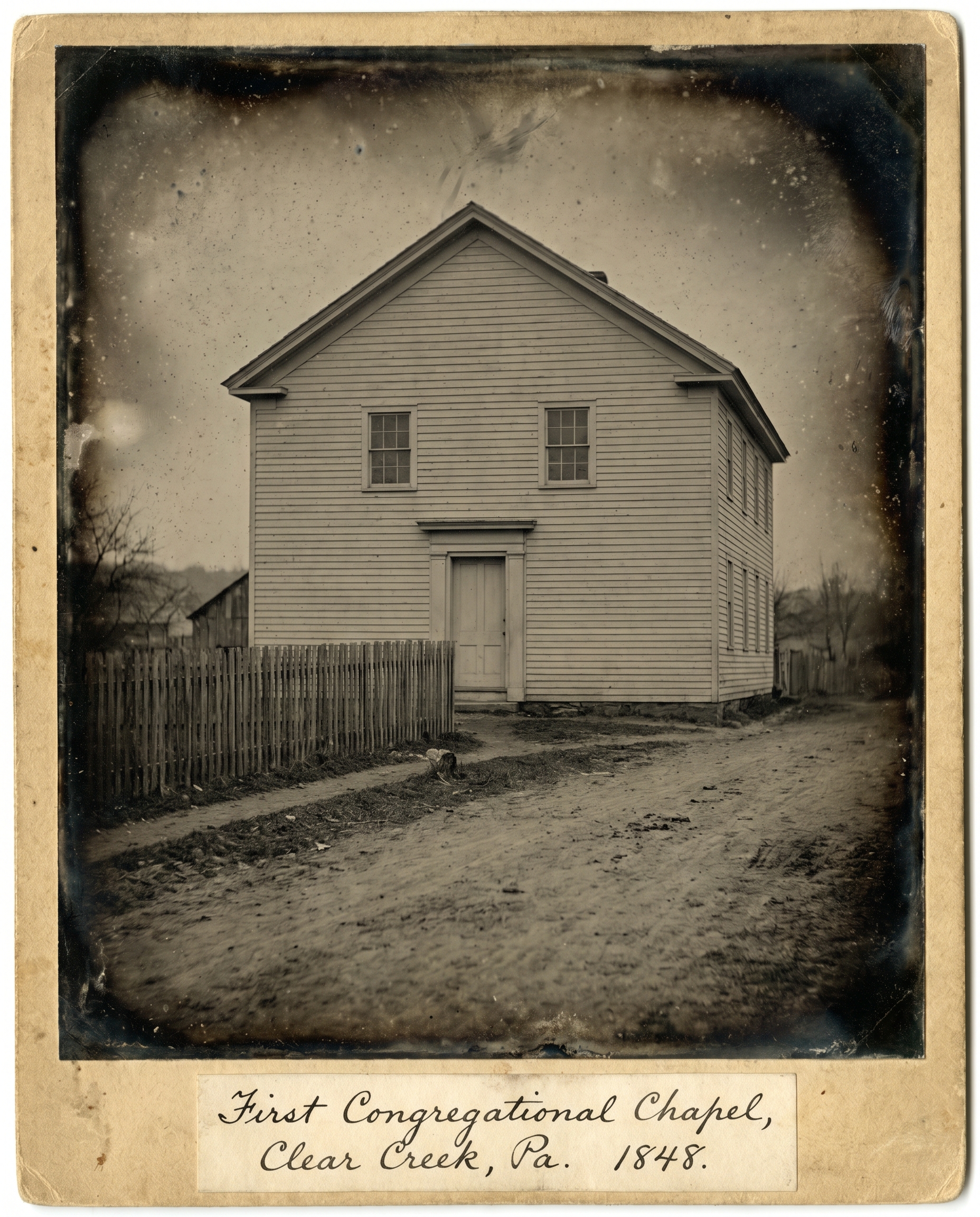
William Hartwell came to New Castle from Bethlehem in 1842 with a chest of cabinetmaker's tools, a young wife named Ellen, and ten dollars. He set up shop on Mercer Street making tables, sideboards, and the occasional coffin for a parish on the south side of town. His ledgers from those years still survive — single-line entries in iron-gall ink, showing him hauling lumber to the mills on Tuesdays and delivering chairs to the back doors of New Castle's first wave of merchant families on Saturdays.
The cholera came in the summer of 1848. It moved through the canal workers and the Irish parish on the west end and then up the hill into the Anglo households on Highland and Mercer. The Stewart family, three doors down from the shop, lost three children in eleven days. Mr. Stewart could not bear to send for a stranger. He came to William.
William built the three small caskets in his shop, lined them with the cream-colored linen Ellen had been saving for a tablecloth, and carried them to the Stewart house himself. He laid the children in the ground at the old Pollock cemetery, west of town, beside their grandfather. There is no record of what was charged. There is no record of any payment having been made.
By Christmas of 1848 he had received seven more requests. By the spring of 1849 he had set aside the cabinet work entirely. The shop became the chapel. The neighborhood became the parish. And the line that would eventually become Hartwell & Sons — five generations long, by 2026 — was, although no one yet knew it, drawn.
James, 1882 — The Second Generation
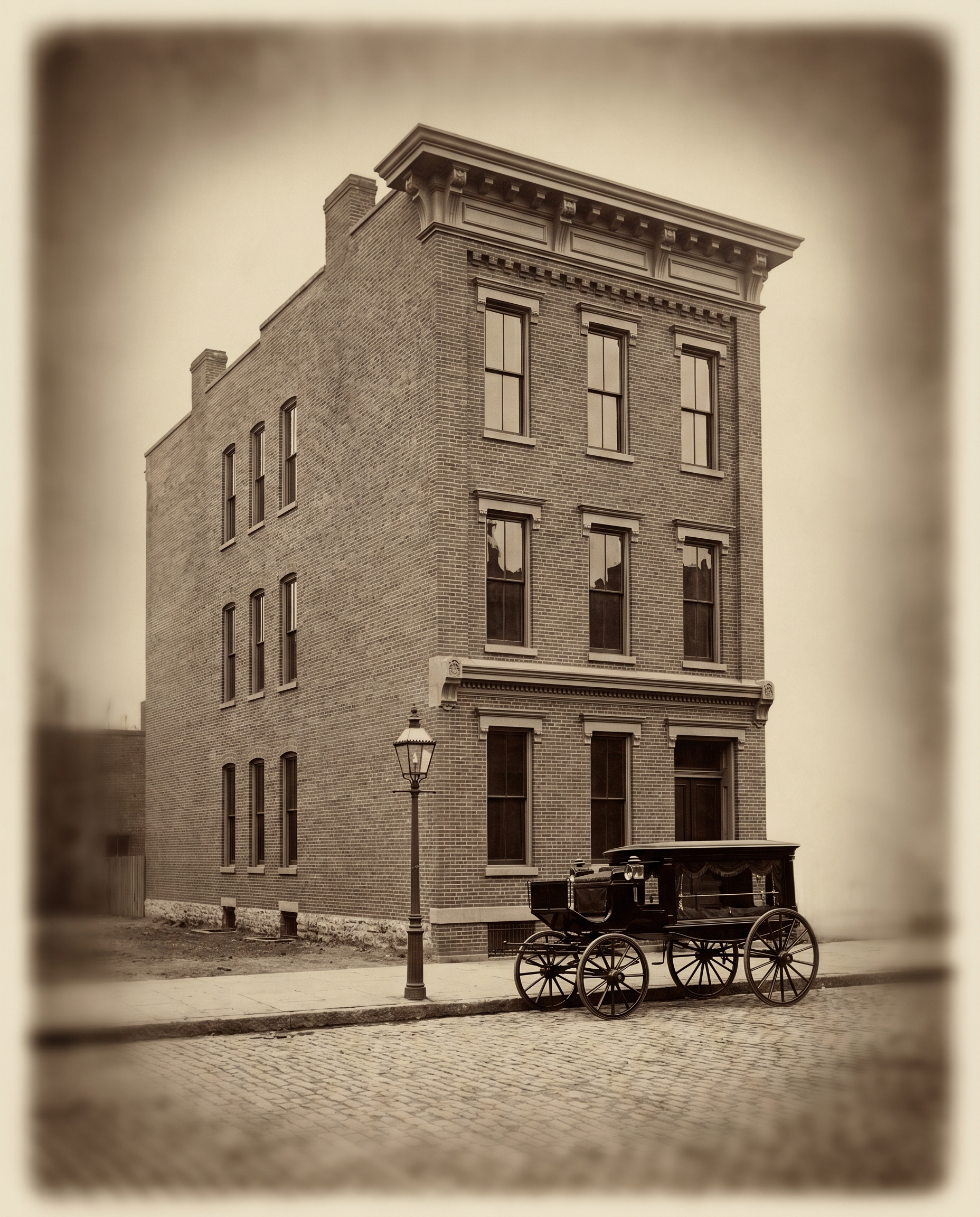
James Hartwell — William and Ellen's eldest son — was born in 1851, three years into the chapel's existence. He grew up sleeping above the front parlor in a half-attic room with a cold stove and a window that looked out on Mercer Street. He learned the trade not by being taught but by being drafted. By twelve he was driving the hearse. By fifteen he was washing the bodies. By twenty he had taken on the bookkeeping and most of the visits to the bereaved.
It was James who made the decision, in 1879, that the Mercer Street shop had become inadequate. The town was growing northward; the families that had once buried from the south side were now buried from the cemeteries on the high ground east of town. The chapel needed to be on the corner where the new town would walk past it. James bought the lot at Highland and Main from the Burwell estate in November of 1880 and broke ground the following April.
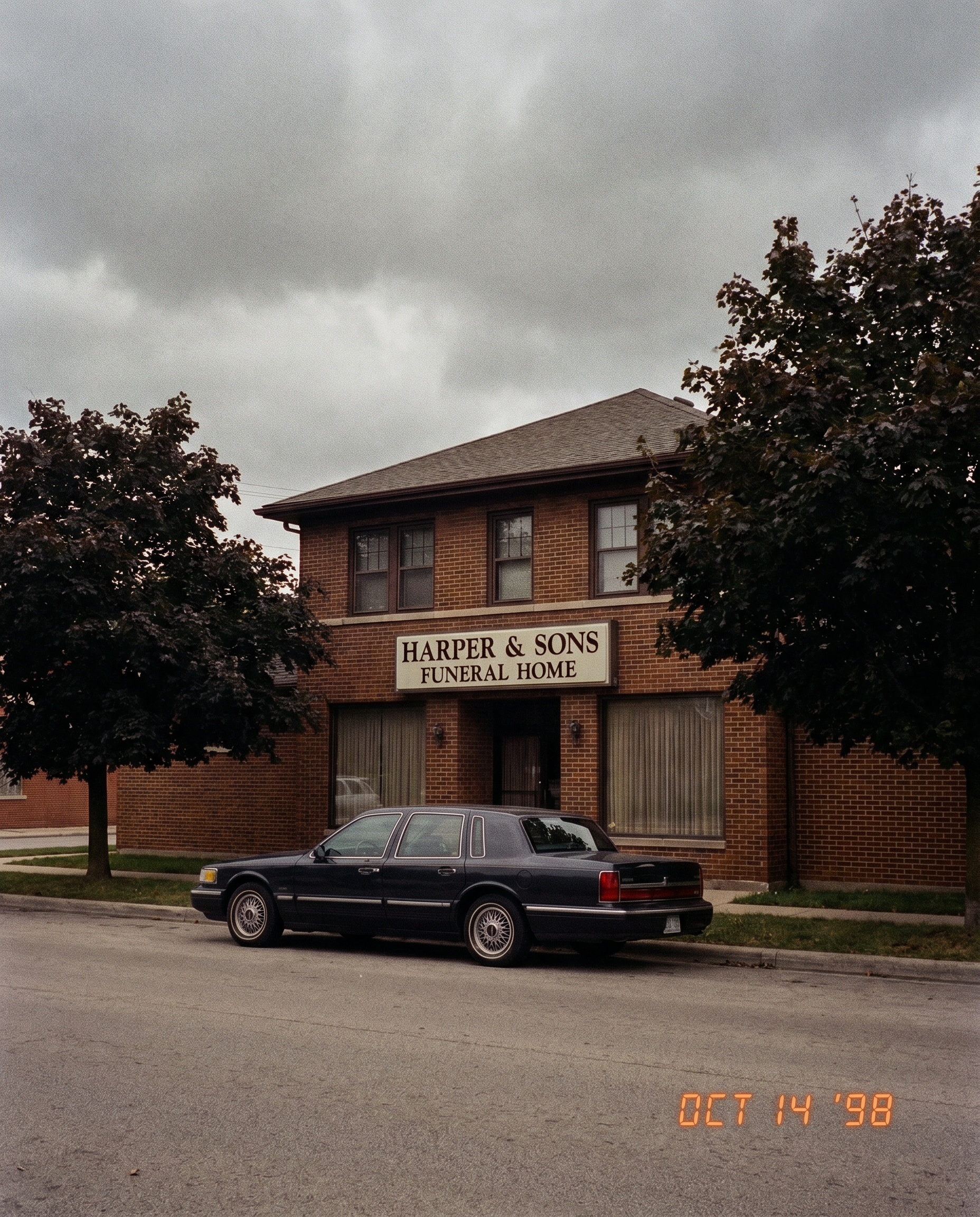
The building was finished in the autumn of 1882. It was the same building, in essence, that stands there today: three stories of red Lawrence County brick, white columned portico, four classical Doric columns, a slate roof, a east-facing chapel that catches the morning sun. The chapel was dedicated on the morning of October 9, 1882, with the Reverend McAvoy of First Presbyterian Church giving the prayer. James gave a one-paragraph address. The text of it is in the chapel's logbook still:
We are not here, we trust, to make our fortunes. We are here, we hope, to know the families of New Castle long enough to be worthy of their trust when the day comes.
The east-side parlor was added in 1925. The crematory was added in 1974. The HVAC was modernized in 2003. The fire-suppression system was retrofitted in 2018. But the building, in its bones — the brick, the floors, the chapel, the columns, the front door — is the same building James Hartwell put up in 1882.
William II, 1925 — The Third Generation
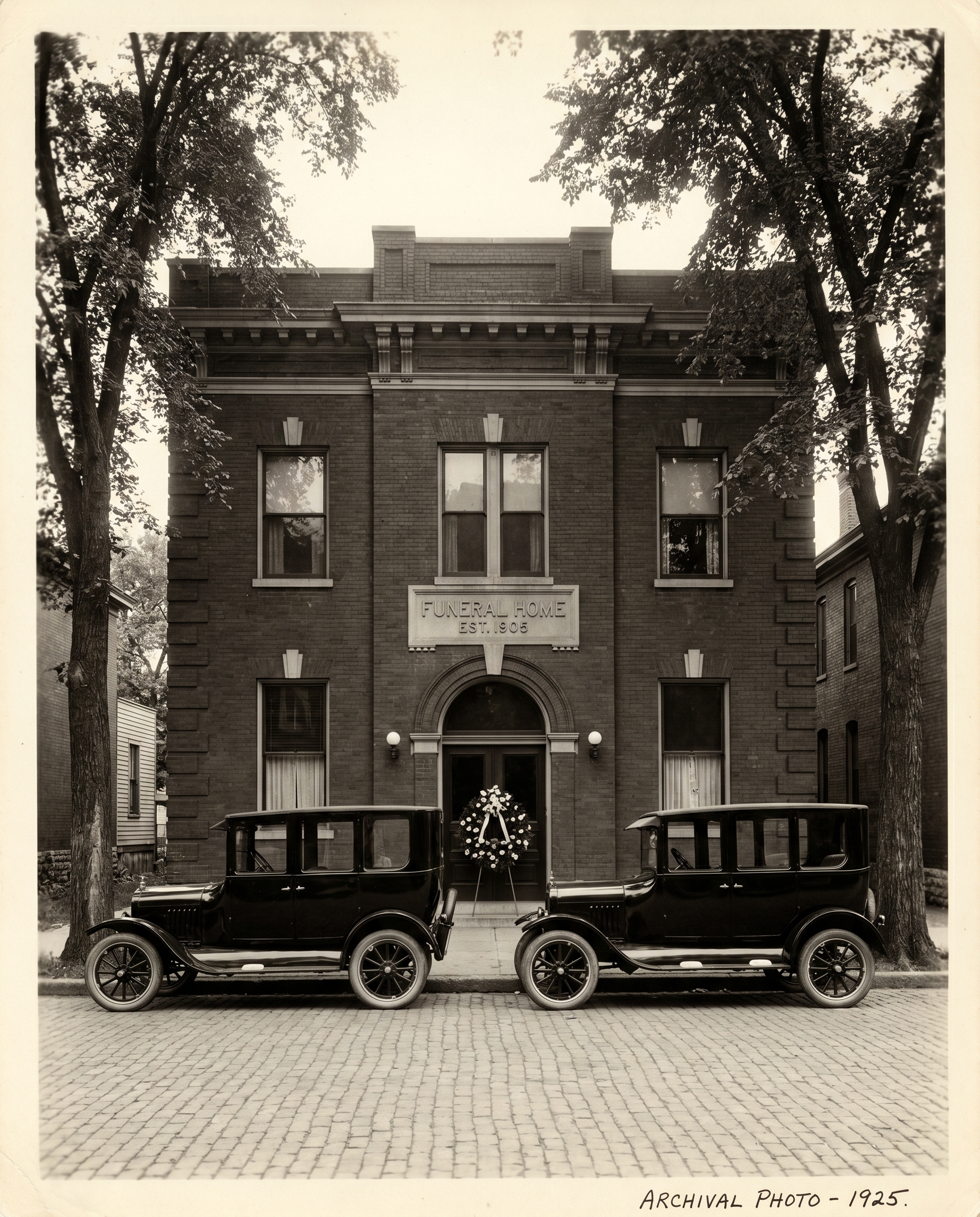
William Hartwell II, James's third son, took over the chapel in 1925, the same year the firm was admitted to the National Funeral Directors Association as a charter member. He was thirty-two years old. He had served in France with the 28th Infantry Division, came home with a Purple Heart and a quiet that lasted the rest of his life, and apprenticed under his father from 1919 until 1925.
The years between the wars were the firm's leanest. William II buried a great many flu victims in 1918 and 1919, and afterward saw the city's population shrink with every steel-mill closure. He kept the chapel solvent largely by trading services with the Pollock and Greenwood cemeteries — Hartwell & Sons would handle the visitation and the procession; the cemeteries would handle the committal at a discount; the families paid only for what could be paid.
It was William II who instituted the firm's first written policy on what came to be called at-cost burials: any New Castle family who could not afford a funeral would receive one anyway, with the firm absorbing the cost. The policy has never been written down outside the chapel's own log. It has never been advertised. It is still in force.
James II, 1962 — The Fourth Generation
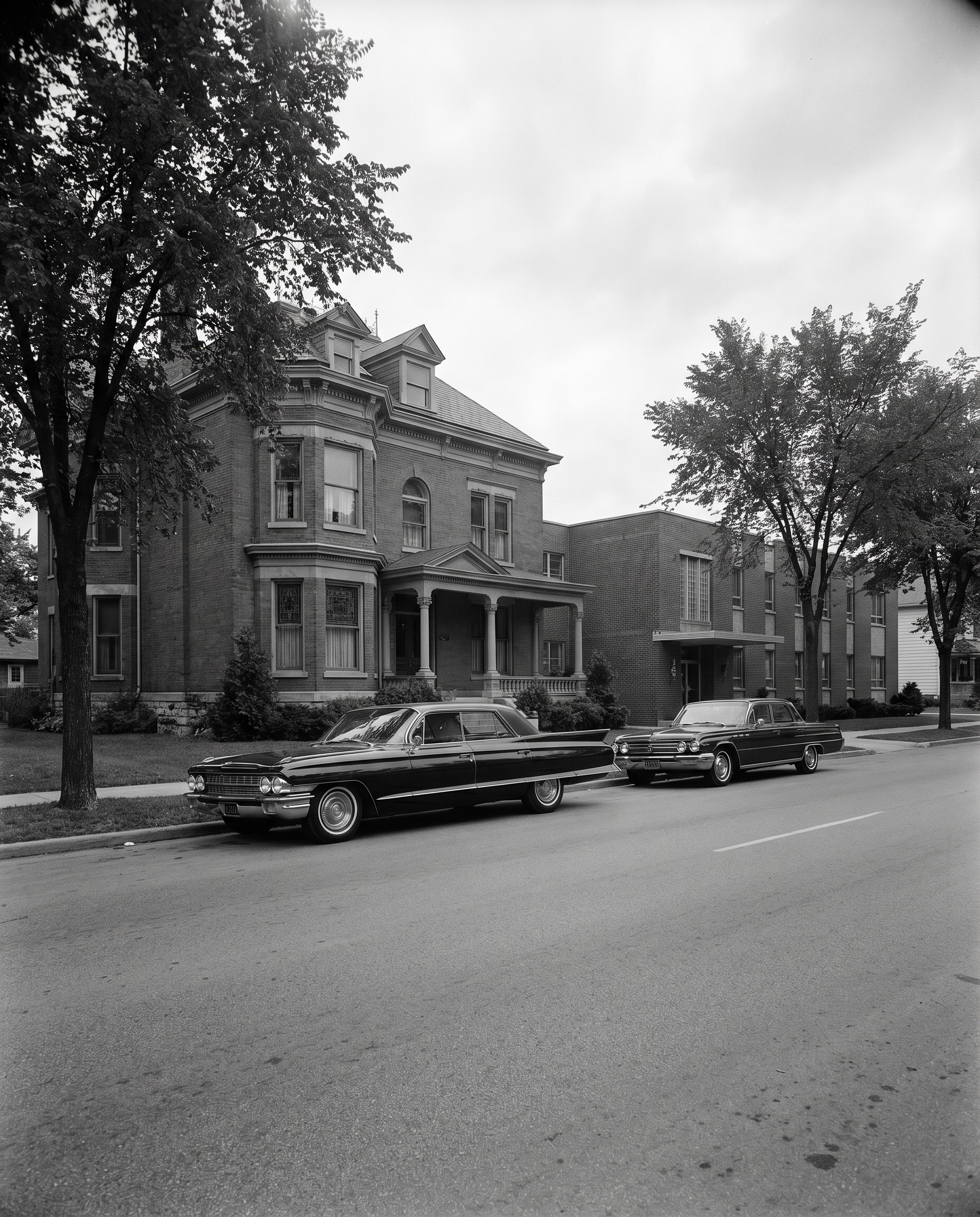
James Hartwell II — the current Margaret's father — was born in 1924, served in the Pacific from 1942 to 1946, and apprenticed under his father from 1947 until 1962, when his father retired and turned the firm over to him. He was thirty-eight years old.
James II oversaw the east-wing expansion in 1962, which doubled the firm's reception capacity. He instituted the home's veterans-services program in 1963, beginning with full-honors burials for Korean War casualties returning home and then expanding to all veterans of any conflict. He was awarded the NFDA's Pursuit of Excellence Award in 1989, the only New Castle firm ever to receive it. He installed the on-premises crematory in 1974, against the advice of his accountant, on the conviction that families should know who handled their loved one's cremation, where it took place, and when.
He retired in 1998 and turned the chapel over to his daughter Margaret. He is now ninety-eight years old, still lives in the apartment above the front parlor, still walks the chapel hallway most mornings, still answers the phone on Sunday afternoons. If you call between two and four on a Sunday, you may very well hear his voice.
Margaret, 1998 — The Fifth Generation
Margaret Hartwell-Brennan grew up listening at the kitchen door. She earned her funeral director's license at twenty-three and joined her father at the chapel the same week. She has served the families of New Castle for twenty-six years. She is the first woman in the family to lead the firm. She is also the only Hartwell to have grown up entirely after the funeral profession had begun its slow decline into a corporate-rollup industry; the trade press she read in college was already telling her, in 1992, that independent firms like hers had no future. She has spent the years since proving that wrong.
Under her direction the home has expanded its grief-support programs (begun 2002, now running two grief groups a month), its work with the parish-based pre-need ministries at Sacred Heart and First Presbyterian, and its partnerships with Lawrence County Hospice. She also instituted the firm's first written commitment to transparent pricing: the General Price List has been printed and posted in the front parlor since 2003 — long before federal disclosure rules required it.
We have buried four governors, one congressman, two parishioners who became saints in the eyes of the children they raised, and the grandfather of every other person on Highland Street. The chapel doesn't keep score. We just keep showing up.
Her son Henry, sixth generation, begins his apprenticeship this year. He is twenty-four years old and graduated from Pittsburgh Institute of Mortuary Science in May. The chapel will, with luck and grace, continue.
Visit the chapel
If you would like to walk through the chapel — the front parlor, the east wing, the chapel proper, the small garden out back — we will show you. There is no obligation, and there is no expectation. Bring your questions. Bring your skepticism. Bring your grief if it is what you have to bring.
Or call. (555) 123-4567. The line is answered by one of us, twenty-four hours a day, three hundred and sixty-five days a year.